Volume 8
Summer Edition 2011 |


That your Freedom Lawns program is truly scientifically formulated????
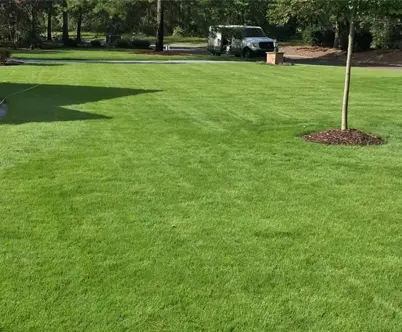
That's right! Each of your Freedom Lawns applications are specially designed for your particular lawn's needs! The nutrient values in our fertilizers are different for each lawn type and for different times of the year. The nutrients that we supply for your lawn are distributed in a scientific sequence so that your grass plants will get all of the nourishment that they require for the growing year! Think of it as a diet plan for your lawn! Each step is critical in attaining a positive end result! |
Freedom Lawns
Employee Spotlight

Dave Rebillard
Operations Manager
Freedom Lawns
New Hanover County , NC
In this edition, we would like to highlight one of the key employees in the Freedom Lawns of Wilmington, NC office, Dave Rebillard. Dave is an Operations Manager for Freedom Lawns. Dave coordinates daily production and service schedules for the company and also manages his own service area. Dave has been in the “Green Industry” for over 20 years and has been with Freedom Lawns for over 7 years. Dave has excellent turf grass and ornamental plant knowledge and does a great job working with the companies' turf specialists. When Dave has some time off from Freedom Lawns he enjoys spending quality time with his wonderful wife Bridgett and their 11 year old daughter Sarah. Dave has many hobbies which of course include gardening and landscaping, boating and fishing off of our coastal waters, and following his favorite team, the Red Sox!
We asked Dave what he most enjoyed about his career at Freedom Lawns. Dave's reply was, “I have worked for several other lawn care companies during my time in the lawn care industry. I like the Freedom Lawns approach of treating all lawns differently and using the most environmentally sound products and practices available to maintain great looking lawns!”
Dave does a wonderful job for us at Freedom Lawns and sets a fine example for all employees to follow! |
Freedom Lawns
Delicious Barbeque
Corn on the Cob

A tasty corn on the cob treat that will be a smash with all of your guests and friends! This is just awesome as a side dish with fresh garlic or onions.
Here are your Secret ingredients:
1 Teaspoon of chili powder.
1/8 teaspoon of dried oregano.
1 pinch of onion powder.
1 pinch of cayenne pepper, salt, and black pepper.
1 half cup of butter.
6 ears of corn-husked and cleaned.
Here's All That You Do....
1. Pre-Heat grill for medium to high heat.
2. In a medium bowl, mix together the chili powder, cayenne pepper, garlic powder, salt and pepper. Blend in the softened butter and stir. Apply this mixture to each ear of corn and place each ear onto a piece of aluminum foil big enough to wrap the corn. Wrap like a burrito, and twist the ends to close.
3. Place wrapped corn on the pre-heated grill; cook 20 to 30 minutes, until tender when poked with a fork. Turn corn occasionally during cooking.
4. Serve and Enjoy! |

Problem - Black film on the leaf of your plants.
Likely Cause -Likely cause - Sooty mold. This is a fungus that develops as a result of insects such as scale, aphids, and white flies. The insects secrete a sticky substance called honeydew. Take care of the insect problem and wipe the sooty mold off the foliage if possible.
Problem - Lawn is grey looking; blades are thin and look folded.
Likely Cause - Dehydration or isolated dry spots during very warm weather. Some sandy soils are hydrophobic, meaning they can not retain water, but actually repel water. Try adding organic matter, good topsoil, and composted manures to these areas to improve water retention. Irrigate during the early morning hours.
Problem - The Crepe Myrtle is healthy with lots of foliage, but it won't bloom.
Likely Cause - Crepe Myrtles require at least 70% sun to produce acceptable blooms. Prune off seed pods on the ends of branches from the previous year. A light pruning in late February or early March will enchance new growth. Crepe Myrtles produce flowers on new growth. Fertilize in February or early March with a high phosphorus/super phosphate to prompt flower production.
Problem - The grass turns bright yellow during spring green up.
Likely Cause - Iron Chlorosis (iron deficiency) is generally the results of a soil or irrigation water pH, which is too high. This locks up available iron to the grass and hinders the production of chlorophyll. This is also common on some plants such as gardenias. Improving the soil pH, stopping or reducing irrigation in the early spring, and supplemental iron treatments will help.
Problem - Mushrooms are popping up all over the lawn and landscape beds.
Likely Cause - Mushrooms are a fungus that will develop on decaying organic matter in the soil as temperature and moisture increase. Mushrooms are generally just an eye sore and are not detrimental to your lawn or landscape plants. They will form on decomposing tree roots in the soil, wood mulches in the landscape, etc. Mushrooms are also correlated with a lawn disease called "Fairy Ring". You can try to dig up and remove old roots and other wood from the soil, reduce irrigation, and aerate the soil to improve air movement. In landscape beds, turn the mulch over occasionally during wet periods to help dry it out.
Problem - Spiders, ants, palmetto bugs and other creepy crawlers are invading your home!
Likely Cause - You don't have Freedom Lawns very effective Perimeter Pest Control treatments applied around the foundation of your house! Call us for details on this very reasonable service. |
Are you growing herbs this summer?

Here's the best way to dry and store them!
by Mark Tamn
Allowing your herbs to air dry may be the slowest method of drying, but it is also the best as a slow drying process will not deplete the herbs of their oils. This process works best with herbs that do not have high moisture content to begin with. These herbs include Rosemary, Oregano, Thyme, Dill and Marjoram. Herbs with higher moisture content such as Basil, Chives, Mint or Tarragon preserve better in a dehydrator or they can be freeze dried. Some folks like the quick and easy way of drying herbs- the microwave oven! This method will surely work but will also cook the oils and flavor out of your herbs..
Click Here To Read More! |
Don't Live With
Unwanted Guests!

Ask us about our perimeter pest insect control for your home - very reasonably priced and extremely effective. Start now and save $10.00!

|
THE TWO LINED
SPITTLE BUG
The two lined spittle bug is a serious pest on
lawns and even some ornamental plants such as Boxwoods and Hollys in the southeastern United States.
The adult spittle bug is black with two very distinct orange lines running horizontally across its back.
The spittle bug nymphs are a pale yellow or cream color with a brown head. They can be seen in lawns covered with “spittle mass”. This is a substance that actually resembles saliva. It is not unusual to find some spittle bugs jumping up on your mower to catch a free ride from late May until fall. Seeing a few spittle bugs once in a while is actually quite common. However in large numbers, the larvae can cause extensive damage on turf grass, particularly Centipede and St. Augustine lawns.
Spittle bugs tend to favor lawns that are not mowed on a regular basis and that are constantly wet. Spittle bugs will damage lawns in sun or shade. To discourage spittle bugs from setting up house in your lawn, mow on a regular basis (at least weekly!!) at the proper height, and do not over water your lawn.
If you notice excessive populations of spittle bugs in your lawn, please contact our office immediately. Severe damage can sometimes occur during late fall as lawns are beginning to enter the dormancy period.
|

|
|

By Mark A. Tamn

I have had the opportunity and great pleasure to tour many fine gardens during my 35 plus years in the landscape industry. For me, the most memorable gardens are the ones that defy conventional landscape wisdom and include unique plant selection and unusual design themes.
When most of us folks here in the south think of outdoor cactus, we think of that god awful, spiny, prickly pear that we see growing native in our sandy nutrient poor soils.
Well believe it or not, you don't have to live in the southwest to convert a portion of your landscape into a spectacular southwestern cactus garden! Some of the colorful flowers of the cacti are fascinating and the different sizes, shapes, and textures of the pads (enlarged leaves), will enhance interest to your cactus garden section. Keep in mind that cacti will generally look their best from spring though late fall.
A Few Varieties to Try
One of the most adaptable and easiest genuses of cacti for us to grow at the beach is the Opuntia, of which there are many varieties with different colors, shapes and sizes to choose from.
The Opuntia Strigil is a large upright cactus with dark cinnamon brown spines that really jump out against the green cacti pad.
The Teddy Bear cactus produces a bright yellow flower that will turn to a mauve color as fall approaches. The spines of the Scheeri are yellowish gold and the plant can get large.
If you are looking for a lower growing cactus, try the Opuntia Tunicata. This cactus has bright white spines which look awesome against the darker green pads. This cactus will form a ground cover of clusters.
If you are looking for a cactus to plant under your window for security purposes, or a plant that is sure to be a source of conversation, the Opuntia Polycantha is the one for you. This species has long, sharp, intimidating red spines and will dazzle you with yellow colored flowers during the summer months.
To create some nice ground cover with cacti, try the Barrel Cacti. These cacti are small but do spread nicely during the summer growing season. As the Barrel type varieties tend to be moisture sensitive during wet periods in the winter, it is recommended that you cover them up with cans or flower pots to help keep them dry.
Click Here To Read More! |

By Mark A. Tamn
The three key ingredients in maintaining a healthy, vibrant lawn in the southeast is proper nutrition, proper mowing habits, and supplying your lawn with just the right amount of water it will need during the year. The right amount does not necessarily mean more and in many cases, less is better!
Why Spend the Time Managing Your Water Usage?
Reduce Your Water Bill - It is estimated that 70% of homeowners do not water their lawns and landscapes properly. A recent study demonstrated that home owners waste 30-50% of the water by either over irrigating or allowing the water to hit unnecessary targets such as driveways, sidewalks, houses etc. If you rely on municipal water for irrigation of your landscape, the price of water will likely increase with time. If you are on a well, remember that all wells eventually go dry and pumps do not last forever!
Excess Water May Be Killing Your Lawn and Landscape - In reality, there really is no perfect and permanent watering regiment for each and every lawn, as all lawn areas and landscapes are different. Generally speaking, a lawn will require between 1.0 and 1.5 inches of water each week during the PEAK growing season. This can be provided by Mother Nature, a combination of Mother Nature and your watering efforts, or during periods of dry weather, exclusively from your irrigation. The best gauge for determining if your lawn needs water is to observe the color and the grass blade. If you see the color is looking light green or has a greyish hue to it, and the individual leaf blade is folded in (dehydrating), your lawn needs a good, refreshing drink. Additionally, you should probe the soil with your finger a few inches below the soil surface to check the moisture level. Moisture meters can also be purchased on the internet or in garden centers for determining soil moisture content in the lawn and landscape beds.
The factors determining the amount of water your lawn will need during the growing season include; density of your lawn (thicker lawns like Zoysia require more), soil type (sand versus clay or clay loam), sun or shade environment, air flow (open areas) may dry out faster than enclosed sections, susceptibility to fungus disease, contour of the land (slopes or flat, low lying areas), and of course, present weather conditions such as air temperature, wind, and moisture. Keep irrigation off or to a very minimum during the dormant periods of late fall through early spring, as watering during this period may enhance diseases, weeds, and winter injury. Many plant damaging fungus diseases, whether they are on your lawn or on ornamental landscape plants are associated with excess moisture. Excess water may also cause accelerated growth of your plants which will enhance the need to mow and prune on a regular basis! All living things require sufficient water. However, too much of a good thing can create problems. Please do not hesitate to contact your Freedom Lawns office should you ever have any questions or concerns regarding proper irrigation management for your grounds.
|

By Mark A. Tamn
There is no magic age to start introducing your child to the wonderful world of gardening. A child's ability to grasp the concept of how things grow in nature can start at a very young age. Think of Jack sowing a seed and having his beanstalk shoot up in to the sky. Sharing the beauty and passion of gardening and how things grow with your child can be a magical experience for you as well!
You can have your child start helping you in the garden at a very early age. Simple tasks such as helping you push the wheel barrow, watering some annuals in your containers and pulling weeds from your landscape beds. If they are old enough, explain to them that a weed is simply a plant growing in the wrong place or a plant whose virtues are not appreciated!
Involve your toddler or young child by appealing to all of their senses. Encourage them to smell flowers and garden herbs such as rosemary, basil, and onions. If you are growing vegetables such as tomatoes, let them see the progress of the plant from flower to fruit. When the veggie is ready to eat, let them pick it off the vine and take a bite! They will never forget that first tasting experience of some home grown edible fruit or vegetables.
Enjoying some time in the garden with your child can also enhance their overall knowledge of nature. Point out to them the sound of birds singing, or bees hard at work pollinating. The rustling of grasses or trees or the sounds of frogs or crickets chirping are all sounds that will stimulate your youngster's sense of sound and familiarize them with nature.
Children like to touch what they see. Encourage them to touch different textures of plants and soils. Dig up some earthworms in the soil and explain the benefits of these critters in helping maintain a healthy soil.
Gardening can be a year round experience for your child. In the winter, look through the garden catalogs with your child. Get out in the garden on a mild winter day and cultivate your garden, pick weeds, apply lime or other soil amendments and explain to your son or daughter why preparation of the garden is so important.

In the fall, have your child participate in leaf raking festivities. Explain why some trees lose their leaves as the days get shorter and the air gets cooler. Let them make a pool and experience the fun of jumping in the pile of leaves! These simple activities will leave a positive, rewarding memory in your child's heart for years to come! |

By Mark A. Tamn
Several years ago, my wife surprised me by bringing home an orchid plant. Not that it was all that unusual for her to bring plants home. She certainly contributes her fair share to the local economy each spring, by purchasing outdoor annuals and perennials. And of course, yours truly will typically have the distinct honor of planting and maintaining these plants.
Soon after she brought home the first orchid, I noticed another orchid in our living room, and then, another. It dawned on me that growing this fascinating flower was now becoming a hobby for her. Like many other folks who receive an orchid as a gift or admire this elegant plant while visiting someone, she found out that the art of growing orchids can provide a great deal of interest and self-satisfaction.
The history of these marvelous plants can be traced back millions of years, surviving evolution and offering pleasure to dinosaurs and prehistoric man. However it was man and the stripping of many tropical forests during the early 1800's that resulted in some orchid varieties being in short supply and eventually placed on the endangered species list.
Through the years, many cultures throughout the world have embraced the exotic orchid as a symbol of love, beauty, wealth, and strength. Probably because of its fragile and slender appearance, many folks think of an orchid as being one of those difficult plants to grow. But in reality, the orchid is quite a resilient plant. A look back through time will show that the orchid has great survival skills, enabling it to adapt to many different environments and climates including mountain ranges, boggy soils, grasslands, and of course , tropical rainforests.
So many orchid varieties to choose from!
With over 25,000 species and 300,000 cultivars of orchids worldwide, selecting an orchid type may be as challenging as actually maintaining your orchid.
There are generally five or six common varieties that most novice orchid growers will have good success with. One of the most important factors in selecting an orchid variety is matching the environmental needs of the plant to the conditions in the home. One of the easiest orchids to care for is the Phalaenopsis (Moth orchid ). This variety produces an abundance of long petal flowers that will stay in bloom for 6-8 weeks. The Moth orchid will tolerate normal conditions inside a home as it favors daytime high temperatures around 75 degrees, nighttime lows hovering around 65 degrees. It has slightly less light requirements than many other varieties and should do just fine growing in natural light near an east or south facing window. You can sometimes get your Phalaenopsis to bloom twice if you cut the spent bloom just below the third node (joint), once it has completed its blooming cycle.
Another very interesting variety is Oncidium, commonly known as dancing girls. They produce very delicate yellow, brown, and white blooms that will provide you with several months of flowering pleasure. This is another variety that is relatively easy to grow with natural light, moderate watering, and a temperature that you would normally keep your home at.
One of the more elegant orchid varieties is the Cattleyas , better known for its use as a corsage. The Cattleyas is generally larger in size, with very showy flowers that will last from 3-6 weeks. This variety is best grown under artificial florescent lighting, and prefers a cooler temperature than the varieties I mentioned earlier. A cooling 50-60 degrees at night will help prompt bigger and better blooms on your Cattleyas orchid.
The Dendrobrium orchid comes in bright colors of white, purple, or a combination of the two. Remarkably, these plants will last for two to three months or longer under the right conditions. Many orchid growers will put Dedrobrium in the same location as the Cattleyas , as they have virtually the same light and temperatures for optimum growth and health.
Caring for your orchid.
Most experts agree that a novice orchid grower should start out by purchasing a mature plant that is already in bloom. Larger, more mature orchids are able to adapt to new and possibly less favorable environments. One of the keys to achieving great success with your orchids is to create an atmosphere within your home that mirrors the growing conditions of orchids in their natural environment. Proper watering is critical for growing healthy, happy orchids. Excess water will surely result in root rot. To help with drainage, your orchid will require a special organic soil medium comprised of Fir bark or osmunda fern fiber. As a matter of fact, allowing your orchid to get just a little dry will prompt it to bloom more often. I suggest watering once a week during the warmer summer months and perhaps a little less often during the slower growing winter period. Most orchids prefer daytime temperatures 70 to 80 degrees and cooler nighttime temperatures from 55 to 65 degrees. Professional orchid growers recognize the fact that an orchid will require cool nighttime temperatures to set flower buds and will generally adjust the temperatures accordingly. Orchids require bright light, so be sure to place your orchid near a south facing window for best results. Be sure to keep them away from cool drafty windows during the winter months.
Click Here To Read More! |


Freedom Lawns of Charleston is owned and operated by brother and sister Joe Grady and Kathleen Smith. Joe and Kathleen are proud to have been a sponsor of the annual “Coach Tim Touchberry's “ Putting for Parkinson's” golf tournament. The tournament raised an all-time high of $28,000 in its 3rd year. Freedom Lawns of Charleston was one of the top 3 of sponsors out of nearly 20 sponsors this year!
The tournament was held on Saturday March 19, 2011 at the Legend Oaks Country club in Summerville, SC. The event included a shot gun start round of golf with The Freedom Lawns team (captained by Joe Grady) ending up 3 under par 69 with a top 10 finish out of 40 teams! The tournament was followed by a dinner and auction with all proceeds benefiting Parkinson's Research being done at The Murray Center for Research on Parkinson's disease and related disorders at the Medical University of South Carolina.
Joe and Kathleen both decided to sponsor the event because of people they know who have been affected by neurological disorders. Coach Touchberry, whom the tournament was held in honor of, was diagnosed in 2003 with Parkinson's disease. Coach Touchberry was Kathleen's coach in high school. Kathleen learned valuable lessons on life and character from Coach Touchberry. He is a legend in the local sports community and has touched many lives in his 34 years of coaching.
Another person affected was Kathleen's late husband Lee Smith. In 2010, Lee passed away after a lengthy battle with Lou Gehrig's disease. Lou Gehrig's and Parkinson's disease are both neurological diseases that affect motor control. At the moment both diseases have no cure. The encouraging news is remarkable progress has been made in understanding these diseases over the past few decades which will one day lead to a cure.
“We wanted to contribute to the research and awareness of Parkinson's and other similiar diseases that are stealing the lives of our loved ones. More than ever, people are being diagnosed, even in the prime of their lives. We personally experienced the hopelessness of knowing that no cure would come for our loved one, but also experienced the beauty of how a little effort from a lot of people can make all the difference. We want to be a part of that difference” says Kathleen.
We at Freedom Lawns are all proud of Joe and Kathleen's contribution and dedication of time and money to such worthy organizations.
If you would like more information regarding neurological diseases, please visit this site.
|
|